
✨ This article was AI edited. Editorial responsibility: 3D-P.eu.
Produced with AI. This article was artificially generated. Editorial responsibility: 3D-P.eu.
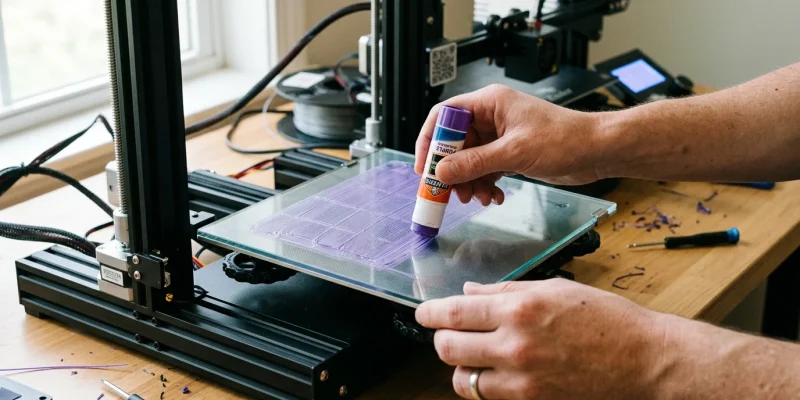
First-layer bed adhesion failure is the single most common frustration in fused deposition modeling (FDM). When a printed part warps, lifts at the corners, or detaches mid-print, the entire build fails. While modern textured PEI sheets provide excellent mechanical grip for PLA and PETG, smooth glass, bare aluminum, and difficult materials like ABS or Nylon often require an adhesion promoter and release agent. The humble school glue stick remains an essential tool in every 3D printing workshop—provided you choose the correct formulation.
How Glue Sticks Work on a 3D Printer Bed: Adhesion vs. Release
A common misconception among beginner makers is that glue stick is used solely to “stick” the part down. In reality, a quality PVA/PVP glue layer serves a dual engineering purpose:
- Adhesion Interface: The polymer binder micro-fills surface imperfections in glass or metal build plates, creating high microscopic contact area and preventing edge lifting caused by thermal shrinkage.
- Release Barrier (Sacrificial Layer): For aggressive materials like PETG or TPU printed on bare glass or PEI, the plastic bonds so intensely that cooling can rip chunks out of the glass bed. The glue stick creates a sacrificial barrier that dissolves in warm water, allowing delicate parts to pop off cleanly without damaging the plate.
PVA vs. PVP vs. Incompatible Glue Formulations
Before grabbing whatever stick is in your desk drawer, review the chemical base. The table below outlines which glue stick types work and which will ruin your build surface:
| Glue Stick Type | Active Chemical Base | Bed Compatibility | Verdict & Recommendation |
|---|---|---|---|
| Elmer’s Disappearing Purple | PVA (Polyvinyl Alcohol) | Glass, Smooth PEI, Mirror, Aluminum | Gold Standard — Visual coverage check, washes with water |
| UHU Stic / Scotch Permanent | PVP (Polyvinylpyrrolidone) | Glass, Borosilicate, Steel Sheets | Excellent — High heat tolerance for ABS/Nylon beds (90°C+) |
| Heavy Duty / Craft Tack Sticks | Rubber/Solvent Elastomers | None | FORBIDDEN — Leaves gummy, insoluble residue; ruins print bottom |
| Glitter / Scented Sticks | Synthetic Dyes & Micro-glitter | None | FORBIDDEN — Particulates destroy first-layer flatness |
Correct Application Protocol: How to Apply Glue Stick Without Clumping
Thick, uneven ridges of glue create high spots that cause nozzle collisions and leave ugly crosshatch textures on the bottom of finished prints. Follow this refined 4-step application technique:
- Clean the Build Surface: Thoroughly wipe the bed with 99% Isopropyl Alcohol (IPA) and a microfiber cloth to remove skin oils and dust.
- Apply on a Warm Bed (45°C–50°C): Preheat the heated bed to 50°C. Apply a single, thin crosshatch layer across the print footprint area.
- The Damp Cloth Smoothing Technique: Lightly dampen a clean paper towel with warm water and buff the applied purple glue in circular motions. The water dissolves the PVA into a micro-thin, completely uniform, glass-like sheen.
- Let Moisture Evaporate: Allow 60 seconds at bed temperature for the water to evaporate, leaving a clear, dry, tacky microscopic adhesive film before initiating the print.
How to Clean Glue Stick Off Your 3D Printer Bed
Because quality glue sticks use water-soluble PVA or PVP polymers, you should never use acetone or harsh chemical strippers to clean them off.
Simply remove the magnetic spring steel plate or glass bed, take it to the sink, and rinse under warm running water (approx 35°C–40°C) with a standard sponge and mild dish soap. The PVA dissolves completely within 15 seconds, leaving zero residue. Dry with a lint-free towel before re-mounting.
Frequently Asked Questions
Do you need glue stick on textured PEI sheets?
For standard PLA and PETG, textured PEI sheets provide superb adhesion without any glue when properly cleaned with warm soapy water and dialed-in Z-offset. However, when printing TPU or ABS, applying a thin layer of glue stick acts as a necessary release agent to prevent permanent bonding and bed tearing.
Why does purple Elmer’s glue turn clear on the bed?
Elmer’s Disappearing Purple uses an acid-base pH indicator dye. The dye is purple when wet in the tube and turns clear as the water evaporates and reacts with air, providing a visual confirmation that the bed is dry and ready to print.
How many prints can you do before reapplying glue stick?
A single well-smoothed PVA glue application typically lasts 3 to 6 consecutive prints. Reapplication is only necessary once the bottom surface shows patches of missing adhesive or if printing large, warp-prone ABS models.
Get our latest guides, news, and insights highlighted in your Google Search & AI Overviews.


